This article was originally published on Substack.
Hi everyone. I want to talk about the importance of a method for managing and developing knowledge and introduce you to Zettelkasten. Before I knew this method, I used to take reading notes in notebooks. I struggled to organize them in a useful way and rarely went back to them. Over time, what I had learned and written faded, and I felt the ideas were poorly connected.

This is a notebook I used for book notes while reading. Here I’m showing the section for Thinking, Fast and Slow by Daniel Kahneman. When I started a book, I wrote the title at the top of a page and, as I read, transcribed and rewrote passages I cared about, one paragraph after another.
That is definitely not the best way to take notes. In December 2022 I learned about zettelkasten through Scott P. Scheper’s book Antinet Zettelkasten: A Knowledge System That Will Turn You Into a Prolific Reader, Researcher and Writer.
I’ll introduce, in a practical way, how to build your zettelkasten. In other posts I want to cover motivations, phases of use, mindsets, communicating with the system, analog vs digital, origins, and more.
Starting with basic supplies:
- 1 pen
- paper (I recommend A6 size)
- 1 box
Take one card and write “Arts and Humanities” in the middle. In the upper-right corner, write 1000. That will be this category’s address in the system.

Take other cards and write:
- 2000 — “Social Sciences”
- 3000 — “Natural Sciences”
- 4000 — “Formal Sciences”
- 5000 — “Applied Arts and Sciences”
This is the initial structure of the system, based on the academic disciplines listed on Wikipedia.
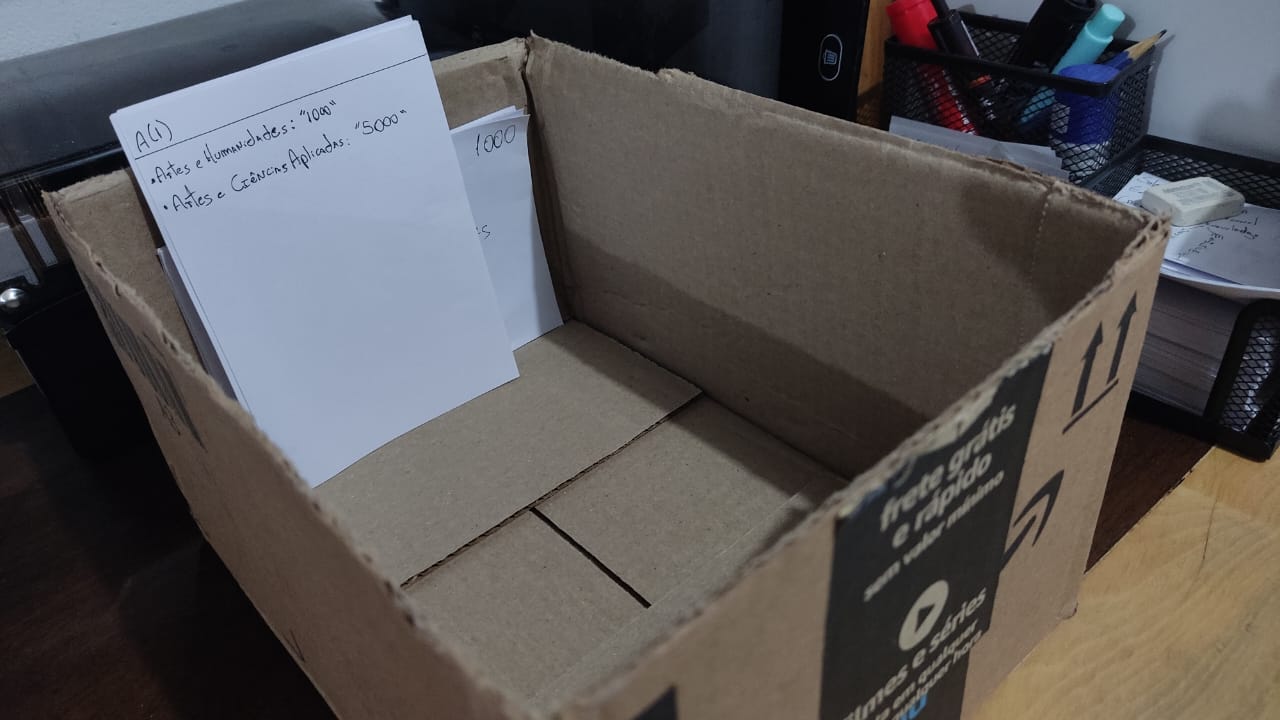
To store the cards, you can use that Amazon box you never threw away.
These cards are called main cards.
Now create the index. Take 26 cards and write the letters of the alphabet in the upper-right corner. These are index cards. We’ll index the cards we created earlier. On card A, write:
- Arts and Humanities: “1000”
- Applied Arts and Sciences: “5000”
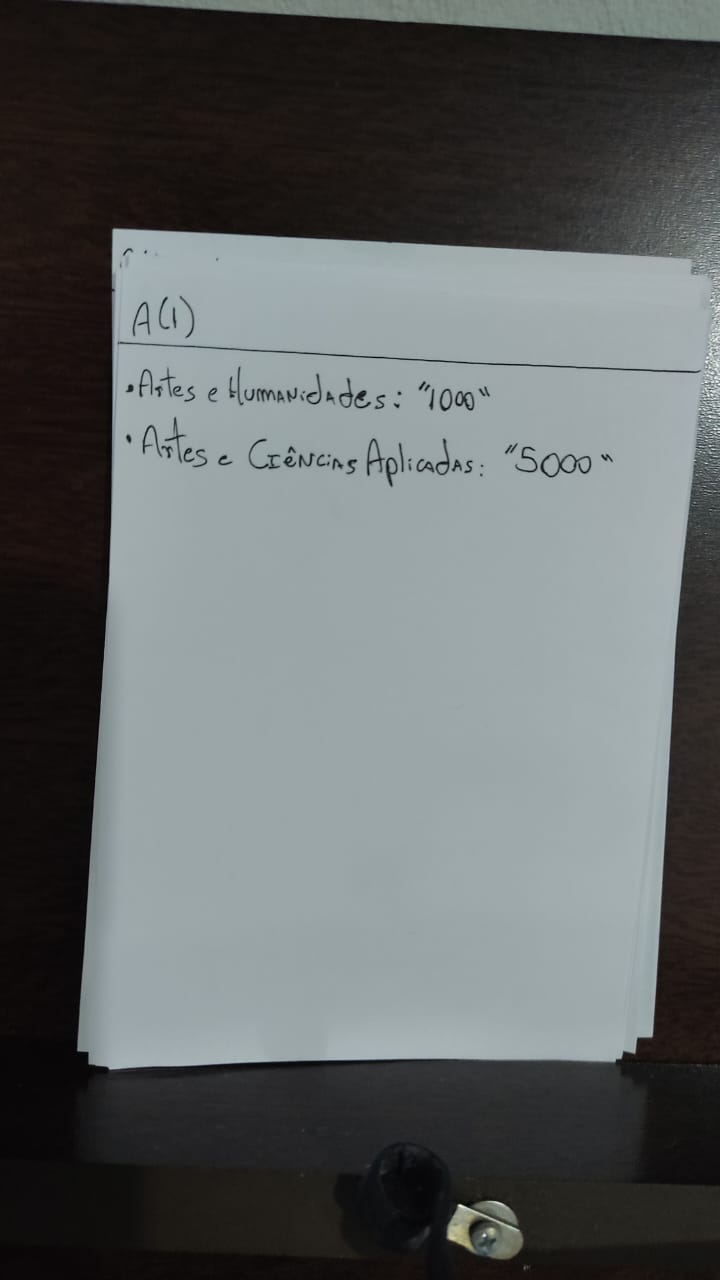
Now on C, add:
- Social Sciences: “2000”
- Natural Sciences: “3000”
- Formal Sciences: “4000”
Place these cards in front of the main cards. Use one card vertically as a divider.
Another card type is the bibliographic card. As an example, I’ll use Thinking, Fast and Slow.
On another card I wrote the book title at the top, the author and publication year in the center, and in the upper-right corner the author’s last name, a slash (/), and a short tag for the work, like thinkingfastslow.
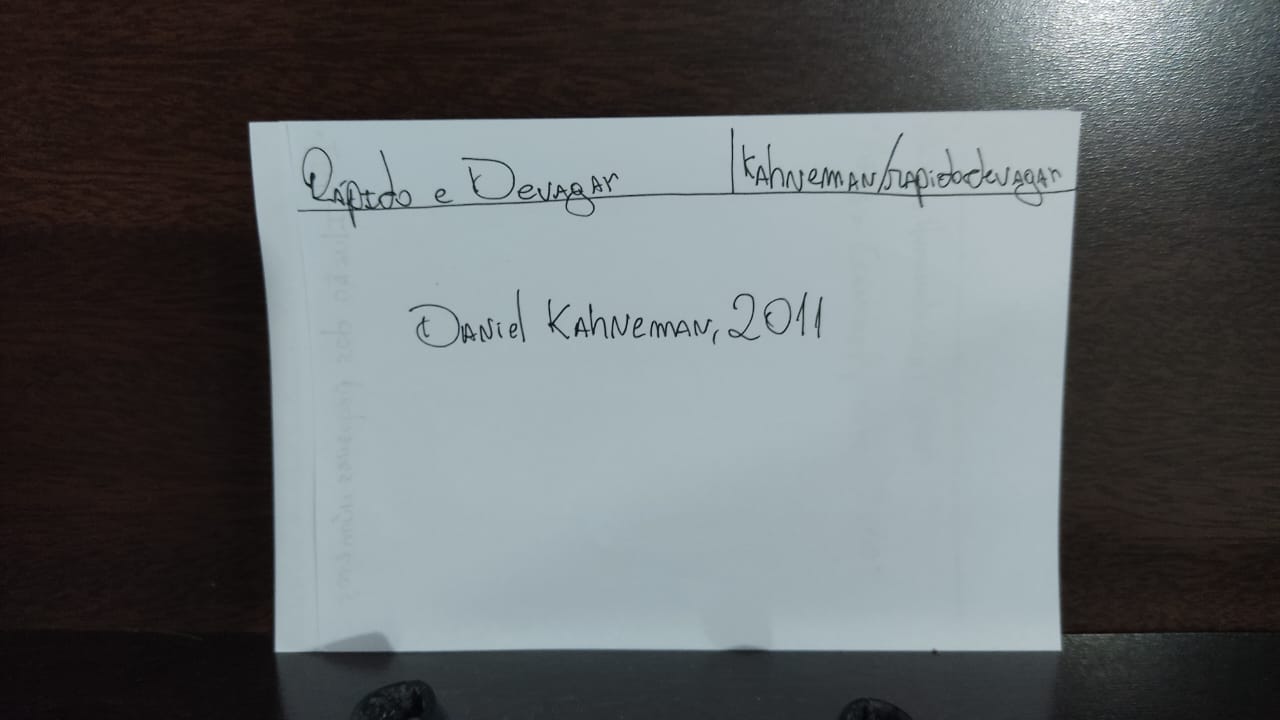
You can make bibliographic cards for any source you like: books, talks, interviews, articles, and so on. The idea is to put ideas that caught your attention behind that card, and only move the strongest ideas into the main card box.
I want to add to the zettelkasten a passage about the “law of small numbers.” Behind the bibliographic card I note the page and a short description—in this case “law of small numbers.”
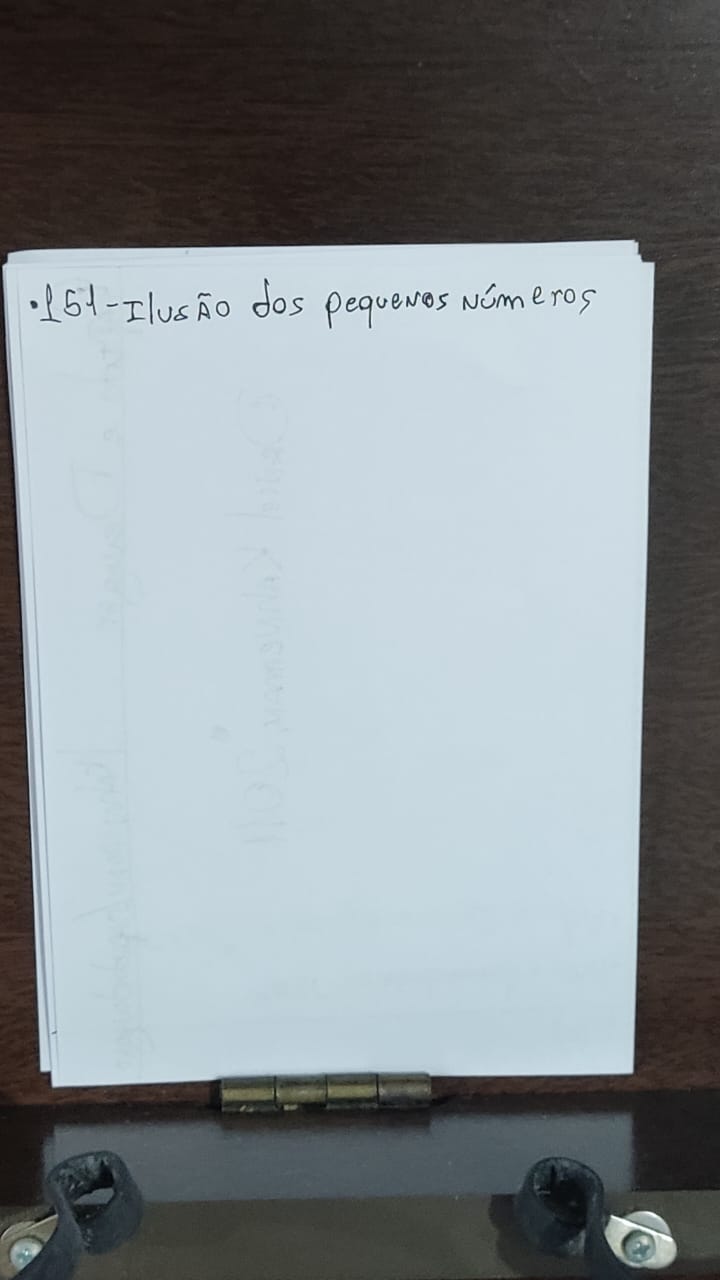
Now I transcribe the passage onto another card.
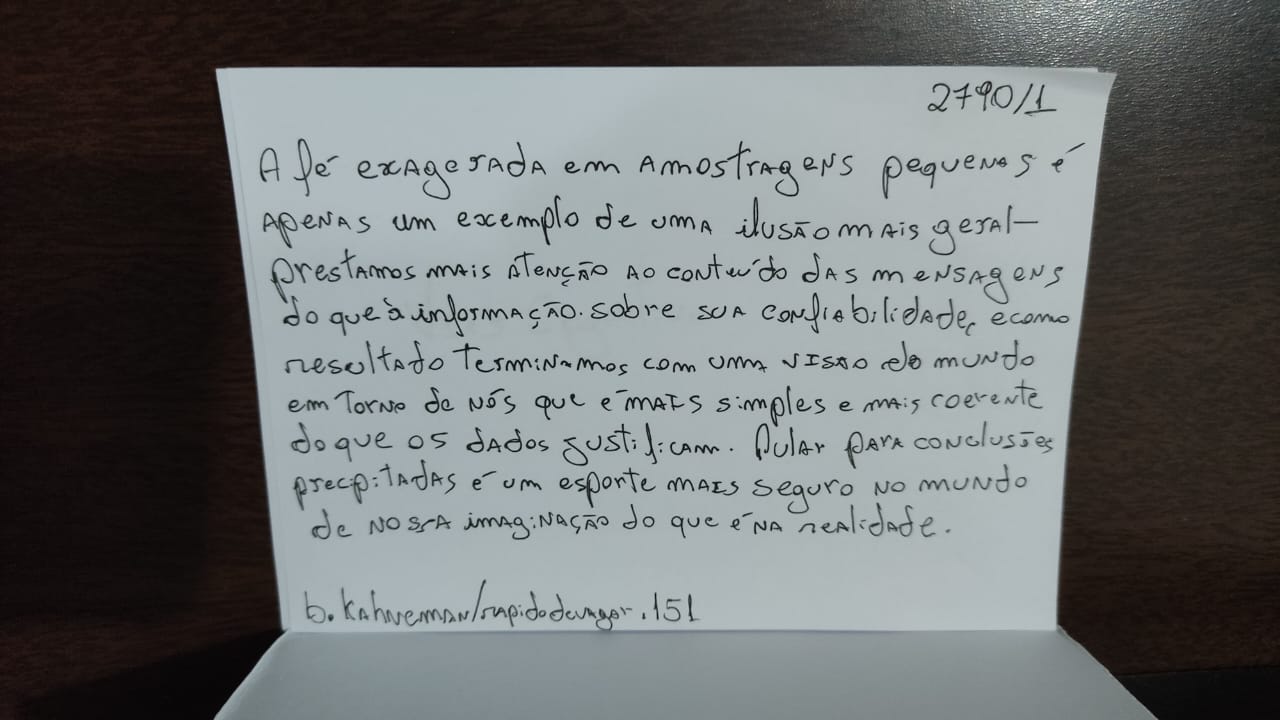
Now I file the card in the system. I chose a category under “Social Systems” called “Psychology” with number 2700, and a subcategory “Cognitive bias” with 2790. This topic interests me but isn’t tightly tied to my work or something I plan to publish about, so this level of detail is enough. If it were work-critical, highly impactful, or something I wanted to write about, I might categorize more finely—or let cards accumulate and file them later.
I write the address “2790/1” in the upper-right corner.

In the lower-left corner I write “b. Kahneman/thinkingfastslow 151”.

I add index entries for “Psychology” and “Cognitive bias.”
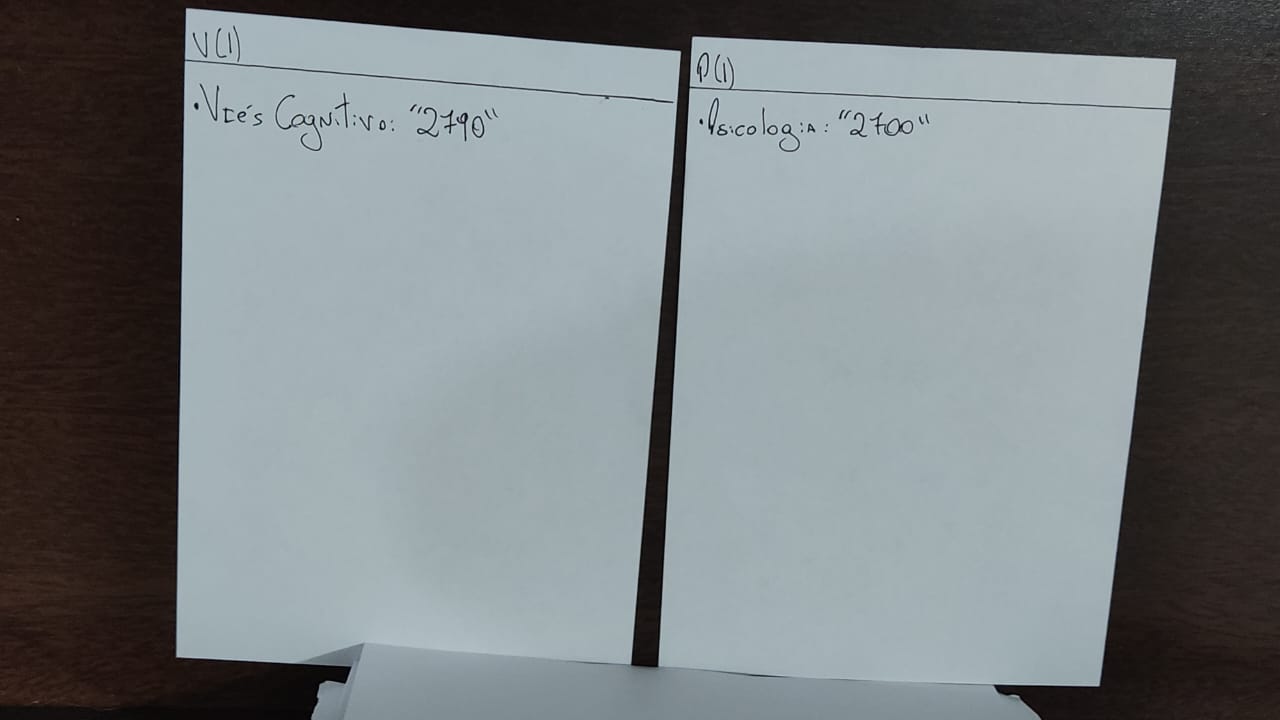
This is an example of an initial zettelkasten structure—I hope you enjoyed it, leave comments, and see you next time.